
Have you ever reached a point where your body seems to react to almost everything?
Foods you used to tolerate suddenly cause symptoms. Supplements that are supposed to support your health make you feel worse. Certain smells, chemicals, mould, fragrances, medications, or environmental exposures seem to trigger reactions that you cannot easily explain.
When the body becomes highly reactive, simply removing more and more foods and exposures is not always the answer. Sometimes, the goal is to help the body become less reactive in the first place.
This is where Bioenergetic Intolerance Elimination (BIE) can be helpful.
BIE is a bioenergetic approach designed to address patterns of intolerance and reactivity by working with the body’s energetic response to specific substances or stressors. It is particularly useful for individuals who have developed significant food, chemical, environmental, or supplement sensitivities and are struggling to identify what their body can comfortably tolerate.
What Is Bioenergetic Intolerance Elimination?
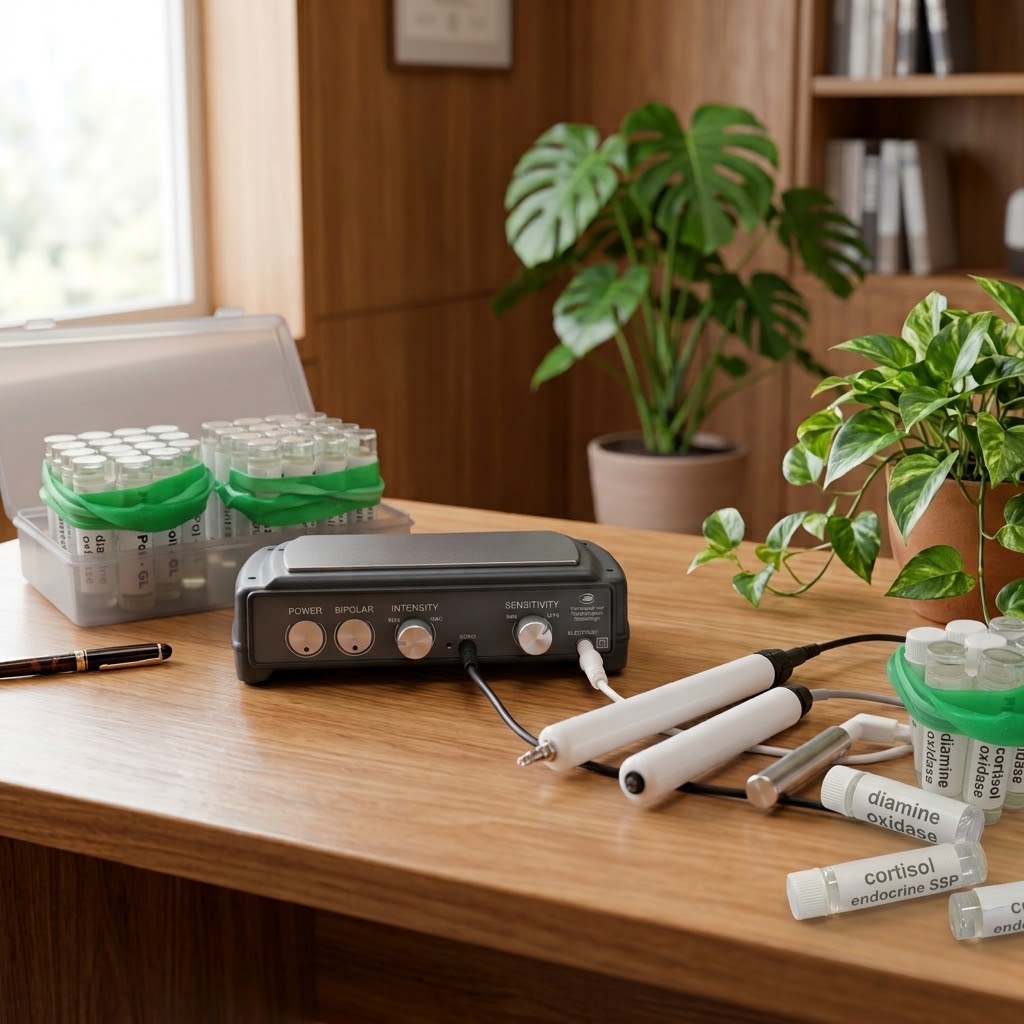
Bioenergetic Intolerance Elimination is a non-invasive modality that uses a specialized bioenergetic device to identify and address energetic patterns associated with substances to which an individual is reacting.
The underlying concept is that the body is constantly receiving information from its environment. Every substance has its own unique energetic characteristics. The body also has its own electrical and energetic systems, which are involved in communication between cells, tissues, organs, and the nervous system.
When the body encounters something it perceives as stressful, it can respond through multiple interconnected systems. This may include the nervous system, immune system, endocrine system, detoxification pathways, and inflammatory processes. In a healthy, adaptable state, the body can encounter an enormous number of substances every day without creating an excessive response.
However, when the body has been under prolonged stress, inflammation, toxic burden, microbial imbalance, nutritional deficiencies, or other physiological strain, its ability to adapt can become overwhelmed. The result can be an increasingly reactive system.
Instead of responding appropriately to a particular substance, the body may begin responding excessively. BIE is intended to help interrupt these patterns and support a more balanced response.
Why Do People Become So Reactive?
Intolerance rarely develops in isolation. Many people who experience significant sensitivities have a history of multiple stressors affecting the body simultaneously.
For example:
- Chronic digestive dysfunction
- Intestinal permeability
- Dysbiosis
- Yeast or fungal overgrowth
- Mold exposure
- Environmental toxins
- Chronic infections
- Nutrient deficiencies
- Blood sugar instability
- Hormonal imbalances
- Poor detoxification capacity
- Oxidative stress
- Chronic inflammation
- Prolonged physical or emotional stress
- Histamine accumulation
- Repeated exposure to substances the body is struggling to process
When these factors accumulate, the body can become increasingly vigilant. The immune system may become more reactive. The nervous system may remain in a heightened state of alert. Detoxification pathways may become overloaded. The gut barrier may become compromised. Eventually, a person may find that foods and substances they previously tolerated now trigger symptoms. This can create a frustrating cycle.
Exposure → reaction → inflammation → increased sensitivity → more reactions.
The person may respond by removing more and more foods from their diet, only to discover that their list of “safe” foods continues to shrink. This is one of the situations where BIE can be particularly valuable.
What Happens During a BIE Session?
BIE sessions are gentle and non-invasive. During a session, the practitioner works with the individual to identify the substances or categories associated with their current pattern of intolerance.
These may include:
- Foods
- Environmental substances
- Chemicals
- Deficiencies
- Fragrances
- Supplements
- Mould-related exposures
- Household products
- Pollutants
- Other substances that appear to trigger symptoms
The individual is typically seatedlaying down or seated comfortably while the practitioner works with the BIE device.
The energetic information associated with the selected substance is introduced during the session. The process does not require the person to ingest the substance they are reacting to. This is particularly important for individuals who are highly reactive and cannot comfortably tolerate exposure.
Why Can BIE Be So Helpful for Highly Reactive Individuals?
One of the biggest challenges with severe intolerance is that the person can become trapped in a cycle of avoidance.
They remove gluten.
Then dairy.
Then eggs.
Then certain vegetables.
Then supplements.
Then cleaning products.
Then fragrances.
Eventually, they may be living in an extremely restricted environment and still experiencing symptoms. At this point, the problem is no longer simply identifying another trigger. The body itself needs support.
BIE can be incorporated into a broader holistic strategy with the goal of reducing the body’s exaggerated response to specific substances.
This can potentially make it easier for someone to:
- Expand their food choices
- Tolerate necessary supplements
- Reduce reactions to environmental exposures
- Improve dietary variety
- Reduce fear around food
- Support nutritional repletion
- Make progress with gut protocols
- Better tolerate supportive therapies
- Move forward with addressing underlying root causes
For someone who reacts to almost everything, increasing tolerance can be an important part of the overall process.
BIE and the Gut
The gut and immune system are deeply interconnected.
A large proportion of the body’s immune activity is associated with the gastrointestinal tract, while the gut microbiome plays an important role in immune regulation. When the intestinal environment is disrupted, the immune system can become more reactive. Dysbiosis, intestinal permeability, microbial overgrowth, inflammation, and poor digestion can all contribute to a body that feels increasingly sensitive.
This is why BIE can be particularly useful when incorporated into a comprehensive gut-focused approach. The goal is not to use BIE instead of addressing gut health. Instead, it can be used alongside strategies aimed at improving digestion, supporting the intestinal barrier, balancing the microbiome, improving elimination, and reducing inflammatory burden. For some individuals, calming the reactivity pattern can make it easier to tolerate the nutritional and therapeutic interventions needed to address these underlying issues.
BIE and Mold Sensitivity
Mold exposure can be particularly challenging for highly sensitive individuals. Someone may react to the environment around them, but they may also become reactive to foods, supplements, fragrances, cleaning products, or other substances while their system is under significant stress. This can make a comprehensive mold protocol extremely difficult to implement. For example, someone may need nutritional support but react to supplements. They may need to increase protein but react to multiple protein sources. They may need binders or drainage support but find that their body reacts strongly to many products. This is where BIE may be incorporated into a broader strategy. By working specifically with the body’s energetic response to substances that appear to be triggering intolerance, BIE may help create greater tolerance and adaptability. That can provide more room to work on the underlying contributors.
The Importance of Looking at the Root Cause
BIE is most powerful when it is viewed as part of a bigger picture.
If someone is reacting to everything, we need to ask why.
Why has the body become so reactive?
What has changed?
What systems are under stress?
What is happening in the gut?
Is there dysbiosis?
Is there fungal overgrowth?
Is there significant inflammation?
Is the body dealing with mold or other environmental exposures?
Are detoxification pathways adequately supported?
Are nutrient deficiencies present?
Is the nervous system constantly in a state of stress?
Are blood sugar and hormones balanced?
These questions matter because intolerance is often a symptom of a deeper imbalance rather than an isolated problem.
BIE can help address the body’s reactivity pattern while other foundational work addresses the contributing factors.
BIE as Part of a Holistic Approach
I do not view BIE as a standalone solution. Instead, it can be one piece of a comprehensive approach that looks at the entire person. Depending on the individual, this may include:
Gut health: Supporting digestion, the intestinal barrier, and a healthier microbial environment.
Nutrition: Providing adequate protein, minerals, vitamins, healthy fats, and other essential nutrients.
Microbiome support: Identifying and addressing dysbiosis, yeast, fungal overgrowth, or other microbial imbalances.
Detoxification and drainage: Supporting the body’s natural elimination pathways.
Inflammation: Identifying the factors contributing to chronic inflammatory signaling.
Environmental factors: Addressing mold, chemicals, pollutants, fragrances, and other exposures.
Nervous system regulation: Supporting the body’s ability to shift out of chronic stress and heightened alertness.
Bioenergetics: Using modalities such as BIE to work with patterns of intolerance and reactivity.
The goal is always to look at the whole picture rather than simply chasing individual symptoms.
Who May Benefit From BIE?
BIE may be particularly helpful for individuals who experience:
- Multiple food intolerances
- Significant environmental sensitivities
- Reactions to supplements
- Chemical or fragrance sensitivity
- Mold-related sensitivities
- Reactions to household products
- Extremely restrictive diets
- Difficulty introducing new foods
- Reactions that seem disproportionate to the exposure
- A history of chronic inflammation
- Significant digestive dysfunction
- Difficulty progressing with nutritional or gut protocols because of intolerance
It can also be considered when someone feels as though their “safe list” is becoming smaller and smaller.
Building Tolerance Instead of Building Fear
One of the most important goals of working with intolerance is helping someone regain confidence in their body. When every meal creates anxiety and every new supplement feels risky, the person can begin to feel as though their body is working against them. The long-term goal should not be to live in fear of food or the environment. It should be to create a body that is increasingly adaptable, resilient, and tolerant. BIE is one modality that can be used to support that process. By addressing energetic patterns of intolerance while simultaneously investigating the underlying contributors to inflammation, gut dysfunction, microbial imbalance, environmental burden, and nervous system stress, we can take a much more comprehensive approach.
Leave a Reply